SERMAR
Center for Ecological Transition
Coordination of a R$15 million FINEP initiative spanning infrastructure, environmental research, and sustainable development from the sea to inland ecosystems.
Scientific leadership means building the conditions in which ambitious questions, talented people, trusted partnerships, and useful evidence can grow together.
Research and institution building
Guilherme Longo’s trajectory combines research leadership with institution building. Alongside a sustained scientific program in marine ecology, he has designed and coordinated laboratories, academic programs, multi-institutional networks, research infrastructure, training initiatives, public-engagement platforms, and large externally funded projects in Brazil and the United States.
This work is guided by a practical idea: excellent science depends not only on individual projects, but also on durable teams, shared infrastructure, inclusive training, clear governance, long-term partnerships, and the capacity to connect evidence with society.
Editorial snapshot: September 2026. Funding spans research, infrastructure, networks, fellowships and collaborative programs.
Department Head and Vice Head at UFRN; Vice Coordinator of a CAPES 7 graduate program; Institutional Development Plan at UFRN.
Leadership and participation in IUCN, Brazilian Red List, GCRMN, protected-area, restoration, and ecosystem-assessment processes.
Training and public value
Mentorship is treated as infrastructure. The lab trains students to move from technical participation to intellectual ownership, combining field skills, experimental design, quantitative analysis, writing, collaboration, and public communication.
The lab connects scientific production with conservation assessments, policy processes, citizen science, journalism, public education, and institutional partnerships. #DeOlhoNosCorais and the Museu dos Corais exemplify this approach by turning reef monitoring and ecological knowledge into opportunities for public participation and learning.
Scientific programs
Setting priorities, aligning budgets and infrastructure, coordinating partners, supporting field operations and monitoring deliverables.
SERMAR
Coordination of a R$15 million FINEP initiative spanning infrastructure, environmental research, and sustainable development from the sea to inland ecosystems.
IntegraMAR
Co-PI of a national integrated marine-biodiversity network supported by PPBio/CNPq, connecting research on impacts, ecosystem services, management, and conservation.
CORDAP
Co-PI and operational coordination linking experiments, logistics, partnerships, communication, indicators, and organism-health monitoring.
Longo Lab
Development of research and training capacity at UFRN since 2016 and international expansion to UMass Boston in 2026.
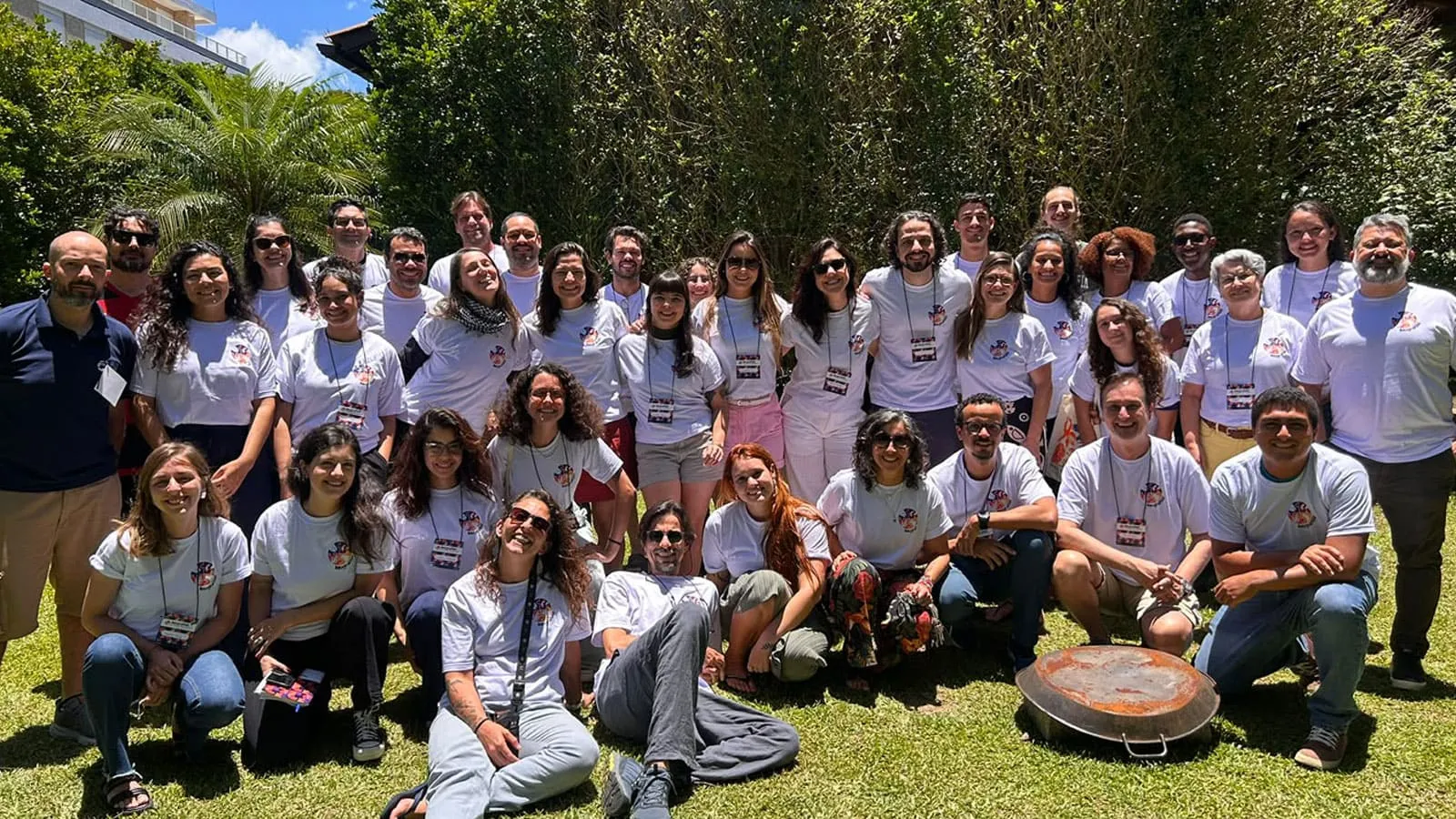
A connected trajectory
Across projects, the lab connects research, institutional continuity, inclusive training and public value.
Meet our network2016 · UFRN
Development of long-term marine research, training and collaborations in the Southwestern Atlantic.
Research · Governance · Society
Academic leadership, research infrastructure, integrated networks, #DeOlhoNosCorais and the Museu dos Corais.
2026 · UMass Boston
A new research program across national systems, maintaining continuity with Brazilian partnerships and connecting tropical and temperate ecosystems.